A Word from the Pastor
As you read this, you may be on your way or coming back from the annual auction dinner dance that incredibly benefits all the school children of our parish school. For almost seventy years, the mission of the parish school has been to educate children in body, mind, and spirit. I hope you will or did win great deals. I thank all the organizers who put countless hours into making it a great success. I thank all who generously donated or bid on and won great prizes. The current and future children of our parish are blessed by your care and generosity.
November is always a month filled with many things. At the beginning we celebrate All Saints and pray that our loved ones are among them. Veterans are praised for their service, and we pray the world is closer to an end of all war by their efforts. Last week’s scripture readings praised Wisdom, especially the wisdom St. Paul proclaims that being disciples will lead us to heaven one day. The gospel of the wise and foolish virgins symbolizes all of us and reminds us that each day we can grow closer to the Lord who will always love us. My friend Msgr. Holquin again has excellent words that help us reflect on the readings we heard last week.
“The wise keep hope alive and the foolish so often extinguish it. Hope is not naïve optimism. It is not whistling in the dark. Hope is the settled conviction, rooted in the Resurrection of Christ, that the last word belongs to God, and that God’s last word is life. Paul ends with a mandate as much as a consolation: “Thus we shall always be with the Lord. Therefore, console one another with these words.”
In the Gospel parable of the ten virgins, Jesus brings wisdom and foolishness together as we face the future. “Five of them were foolish and five were wise.” All ten were invited and all ten had lamps. Notice also that all ten fell asleep. “Since the bridegroom was long delayed, they all became drowsy and fell asleep.” So, the wise are not the ones who never grew tired. Wisdom is not heroic sleeplessness. The difference is that the wise “brought flasks of oil with their lamps.” They had prepared. They had thought ahead. They understood that the bridegroom might come later than expected, and they lived accordingly.
Then comes the part of the parable that troubles people. When the foolish ask to borrow oil, the wise refuse: “No, for there may not be enough for us and you.” It can sound selfish, even unchristian. But Jesus is not teaching stinginess. He is telling us a hard truth: some things cannot be borrowed. You cannot borrow someone else’s lifetime of prayer. You cannot borrow another person’s fidelity, another person’s habits of charity and forgiveness, another person’s friendship with God. Another’s wisdom cannot be transferred to us at the last minute. The oil of a well-lived life is gathered drop by drop, day by day, and each of us has to gather our own.
The good news is that we do not gather it alone. As a sacramental people we should not miss what the Church has always done for us. She fills our lamps with oil. At Baptism we were anointed with the Oil of Catechumens and with Sacred Chrism. At Confirmation, the Chrism sealed us with the Holy Spirit. In serious illness and at the hour of death, the Oil of the Sick strengthens us for the journey. And at every Eucharist, Sunday after Sunday, the flame is fed again. This is how the oil is gathered: through the steady, faithful participation of a life lived in Christ and in his Church, one Sunday, one prayer, and one act of mercy at a time, rather than through grand gestures at the end.
“At midnight, there was a cry, ‘Behold, the bridegroom! Come out to meet him!’” Midnight is the darkest hour, the hour of the unexpected, the hour of fear. Yet the cry that rings out at midnight is not a cry of terror. It is the announcement of a wedding feast. The One who comes for us at the end is not a stranger, a judge we have never met, or an enemy at the gate. He is the Bridegroom, the One who has loved us from the beginning and who longs to bring us into the banquet.
That is why the wise can face the future, and their own end, without dread. Whether that midnight comes for us at the close of history or at the close of our own lives, the One who comes is Love itself.
So, as this liturgical year draws to its close, the question is not whether the Bridegroom will come. He will. The question is whether, when the cry goes up in the night, our lamps will be burning. “Therefore, stay awake, for you know neither the day nor the hour.” Do not stay awake in anxiety. Stay awake in hope, the way the wise do: the way those immigrant grandmothers did, the way the saints did, and the way grace is teaching each of us to do. Keep the oil flowing. Keep the flame alive. And when the Bridegroom comes, may he find us with lamps lit, ready to rise and go out to meet him, and to enter, at last, into the wedding feast that will never end.”

All Hands on Deck for a Bright St. T's Future!
Our High Seas Silent Auction has set sail — and the treasure on board is unlike anything you've seen before.
Browse the bounty, place your bids, and keep a weather eye on your favorites. Whether you're hunting for a culinary adventure, a family escape, a luxurious retreat, or a once-in-a-lifetime experience, there's a winning bid with your name on it. Every dollar raised keeps the wind in our students' sails, funding the programs and resources they need to thrive. So chart your course and let's make waves together!
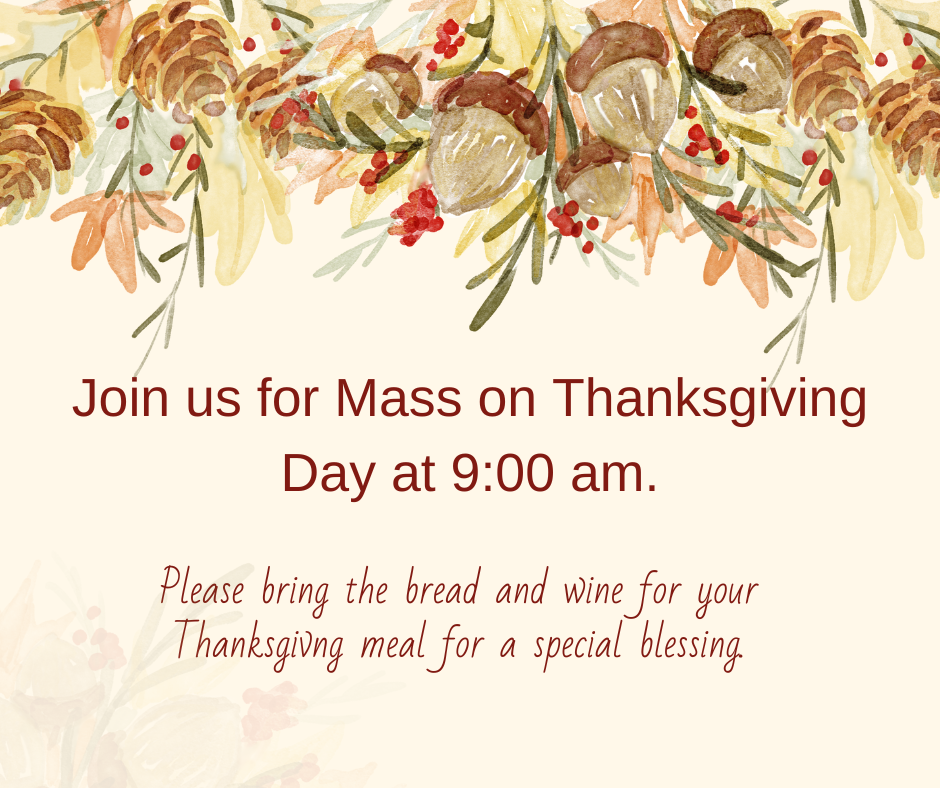
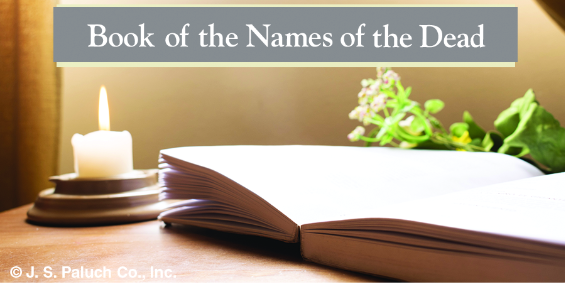
Remember All Souls throughout November The month of November is traditionally reserved in the Church for remembering loved ones who have died. Throughout the month there will be a book in the sanctuary which will include any name you submit or that you write in yourself. Please feel welcome to write the names of your beloved in this book at any time during the month.
Beginning November 2nd there will also be a table in the sanctuary where you may place free standing framed pictures of your beloved dead. The table will be up for the month of November. Please make sure your name and phone number are on the back of the picture.
Beginning November 2nd there will also be a table in the sanctuary where you may place free standing framed pictures of your beloved dead. The table will be up for the month of November. Please make sure your name and phone number are on the back of the picture.

Meeting
November 18, 2026
Mary Clemency, M.D., M.T.S.
Grace and Gratitude as Visitation
Friday Flocknote and Bulletin
St. Theresa needs you! Our parish is seeking a dependable, creative volunteer to craft and send our weekly digital and print communications, ensuring our parishioners receive clear, timely, and visually appealing updates. This is a n opportunity, to donate your creative talents to serve the Church, support our ministry efforts, and keep hundreds of families connected, informed, and engaged with parish life.
Key Responsibilities
- Friday Flocknote: Draft, design, and schedule the weekly email newsletter sent out every Friday.
- Sunday Bulletin: Layout and edit Sunday communications and promotional graphics to support parish life and upcoming liturgy details.
- Visual Design: Use templates and custom graphics to present parish news in a clean, inviting format.
- Timely Delivery: Coordinate with parish staff to meet weekly publishing deadlines consistently.
Qualifications
- Software Skills: Proven experience using Canva (or similar graphic design tools) and comfort navigating digital newsletter platforms (Flocknote experience is a plus, but training is available).
- Communication: Strong editing, proofreading, and writing skills with an eye for detail.
- Reliability: Excellent time management to consistently meet tight weekly deadlines.
- Parish Alignment: A heart for service and an understanding of the mission and culture of the Catholic Church.
Send an email to admin@sttheresaoakland.org if you are interested.
Submission Deadlines
Bulletin and Friday Flocknote articles are due Tuesday evening for inclusion in the Friday and weekend publications. The publications are produced and printed on Wednesday. Send to admin@sttheresaoakland.org
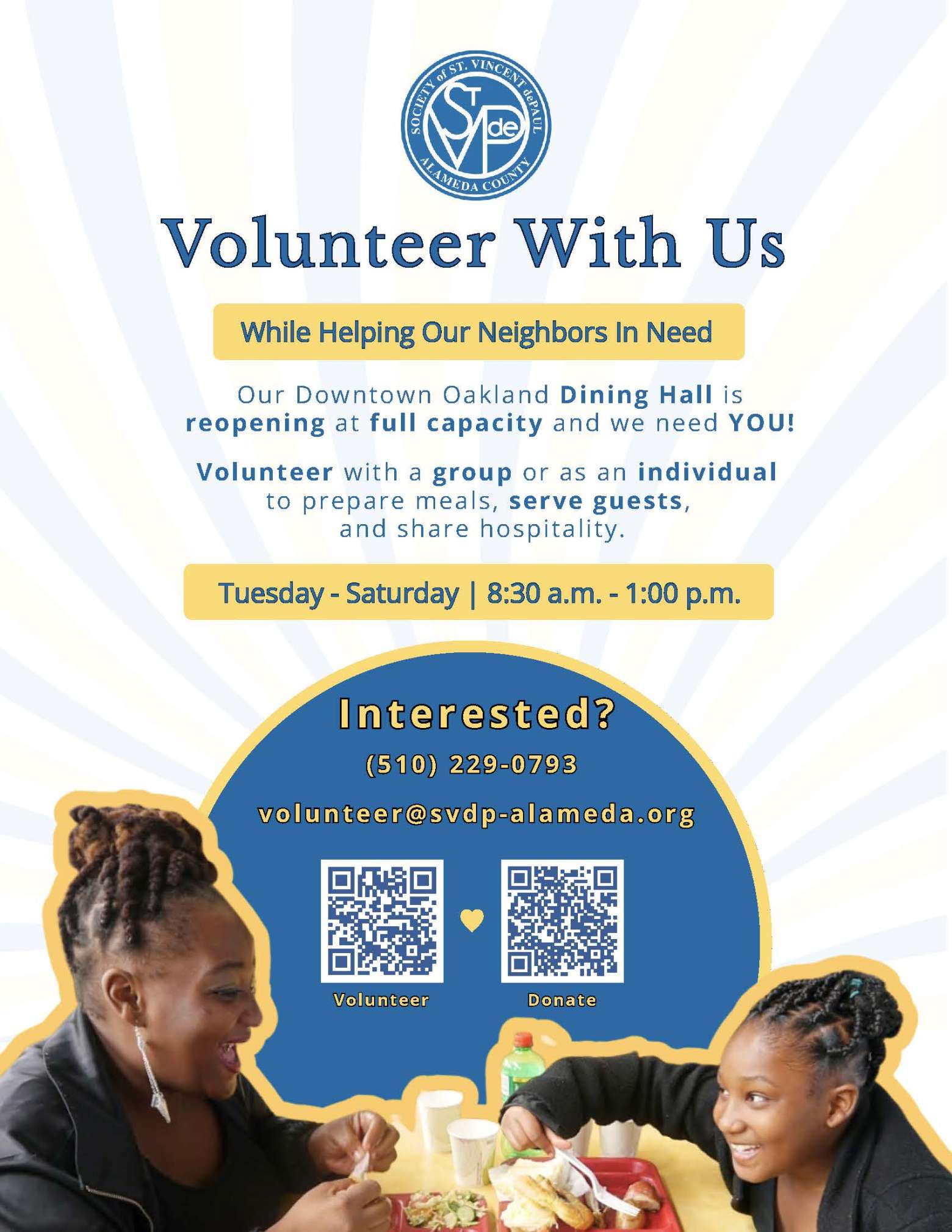
St. Vincent de Paul
Fellow Parishioners:
The St. Theresa Conference would like to sincerely thank our parishioners for their generous contributions to our last Fifth Sunday appeal. The need has definitely never been this great and they really stepped up. Our Neighbors in Need salute you!
St. Vincent de Paul, St Theresa Conference
For St. Vincent de Paul Society, preventing homelessness begins with home visits.
https://www.pillarcatholic.com/p/for-st-vincent-de-paul-society-preventing
Our Parish SVdP Conference meets bimonthly, every third Saturday at 9:30am. If interested in learning more about our Conference’s work, contact Judy Bojorquez at jtsbojorquez@yahoo.com with any general questions. Contact Basil Fedynyshyn at st.theresa@svdp-alameda.org if you have a specific question.
You may use online giving to make a donation to the St. Theresa St. Vincent de Paul conference. https://sttheresaoakland.org/donate.

Text to Donate
Text “GIVE” to the number above to receive a link to our online giving page.
You can use our online giving platform to deepen your commitment to the church and the ministries you care about most. Your recurring gifts will sustain our mission month after month. You will also help our parish by cutting costs for envelopes and paper, and allowing our staff to spend less time processing cash and checks and more time on ministries.
Thank you for your continued support of St. Theresa.
You may also use Online Giving for Second Collections.
November 14 & 15, Diocesan Campaign for Mercy
November 28 & 29, St. Vincent de Paul
December 5 & 6, Parish Maintenance & Improvement Fund
December 12 & 13, Religious Retirement

Sunday Collections (November 2 - 8)
Online Giving: 52 Donors $ 3,030.00
Mass Donation: 38 Donors $ 3,782.00
Reception of the Precious Blood
The reception of the Precious Blood guideline from Bishop Barber, dated May 15, 2023 states: "Other than the priest, no communicant may ever dip the Sacred Host into the chalice to communicate himself."
Assisted Listening available at Weekend Masses
There are two ways to enjoy crisp, clear audio in the church for our weekend Masses.
Option 1:
Download the app, connect to the church wireless network, put in your earbuds, open the app and you are set.
The WiFi password you will need to connect to our wireless network will be available at the sound system desk before and after Mass.
Option 2:
Assisted Listening Devices are available at our weekend Masses. You can check out a device at the sound system desk prior to Mass.
~~~~~~~~
If you have any questions contact Cecile Cuttitta at cecile@sttheresaoakland.org
Volunteering Made Simple
Have you thought about volunteering but worry about fitting it into your schedule? We know life is busy, but here's the good news - serving on Saturdays and Sundays is easier than ever! Out parish used Ministry Schedule Pro, so you can check the schedule online anytime, get reminders, and even request a sub when needed. If you're willing to volunteer, we'd love to have you! Come see me after church today, and I'm happy to help you get connected.
Contact Cecile Cuttitta at cecile@sttheresaoakland.org to volunteer or for more information.
https://sttheresaoakland.org/ministries/liturgical-ministries
Thank you for your faithful support.
Lector
Eucharistic Minister
Sacristan
Altar Server
Greeter
Usher
Projectionist
Video Ministry (9:00 am Mass)
Altar Linens
Weekend Mass Schedule
5:00 pm Saturday
9:00 am Sunday
The 9:00 am Sunday Mass is live-streamed on our YouTube channel for the ill and Homebound.
The link for the live-stream will be on our Facebook page.
https://www.facebook.com/sttheresaoak
YouTube channel link
https://www.youtube.com/channel/UCn5JX1e3QrqXTsa_7qmNCIw
Low Gluten hosts are available at all weekend Masses.
The hosts are less than 20 parts per million gluten, under .002%
For additional information go to https://www.parishcrossroads.com/low-gluten.htm
Please use the presider's communion station to receive a low gluten host.
Weekday Mass Schedule
Monday - Friday
8:30 am
Sacrament of Reconciliation
Saturday ~ 4:00 pm to 4:30 pm
Please remember in your prayers all those who are ill especially:
Matt Mercier, Heidi Parmelee, Dolores Gomez, Alegria Hipolito, Betty Wharton, Juanita Estrella, Olga Lamberti, Roger Baylocq, Susan Springer, Wendy Jones, Orlanda Gonzalez, Kevin Chapman, Diane Cerille, Tom Wilberding, Danny Ramos, Mark Leonard, Christopher Rodriguez, Maryanne Walsh, Rhonda Santeen, John Whatley, Nancy Coyne, Kevin Stallone, Susan Buller, Ann Springer, Ray Bertolotti, William McCarthy, Cindy Crimmins, Fred & Lidia Loupy, Rebecca Rogers, Kathleen Guevara, Clarence Robinson, Armando Diaz de Leon, Bonnie & John Bouey, Marley Malone, Phil Stover, Joey Smith, Raymond Buckley, Jr., Norma Ninalga, Betty Jo Olson, Jennifer Walwark, Greg Govan, Anita Lim, Marilyn McCabe, Steve Lauth, Mary Malloy, John Donovan, Mary Martinez, James Spalding, Tiffany Converse, Adrian McEvilly, Joan Marchi, Diana Nelson Curtis, Charlie Schnellbacher, Maureen Carver, Vince Nims, Barrett Baker, Rick Fama, Eleanor Ceccarelli, Lois Johnson, Antoinette Tamburrino, Anne Marie Roseme, Greg Anderson, Judy Udove, Mary McCole, baby Gianna Sorbello, Yolanda Igano, Betsey Thornton, Karen May, Tom Wallace, John Cocores, Olivia Cors, Aglaia Panos, Keri Nims, Tom Salvatore, Pauline Shear, Larry Ritsch.
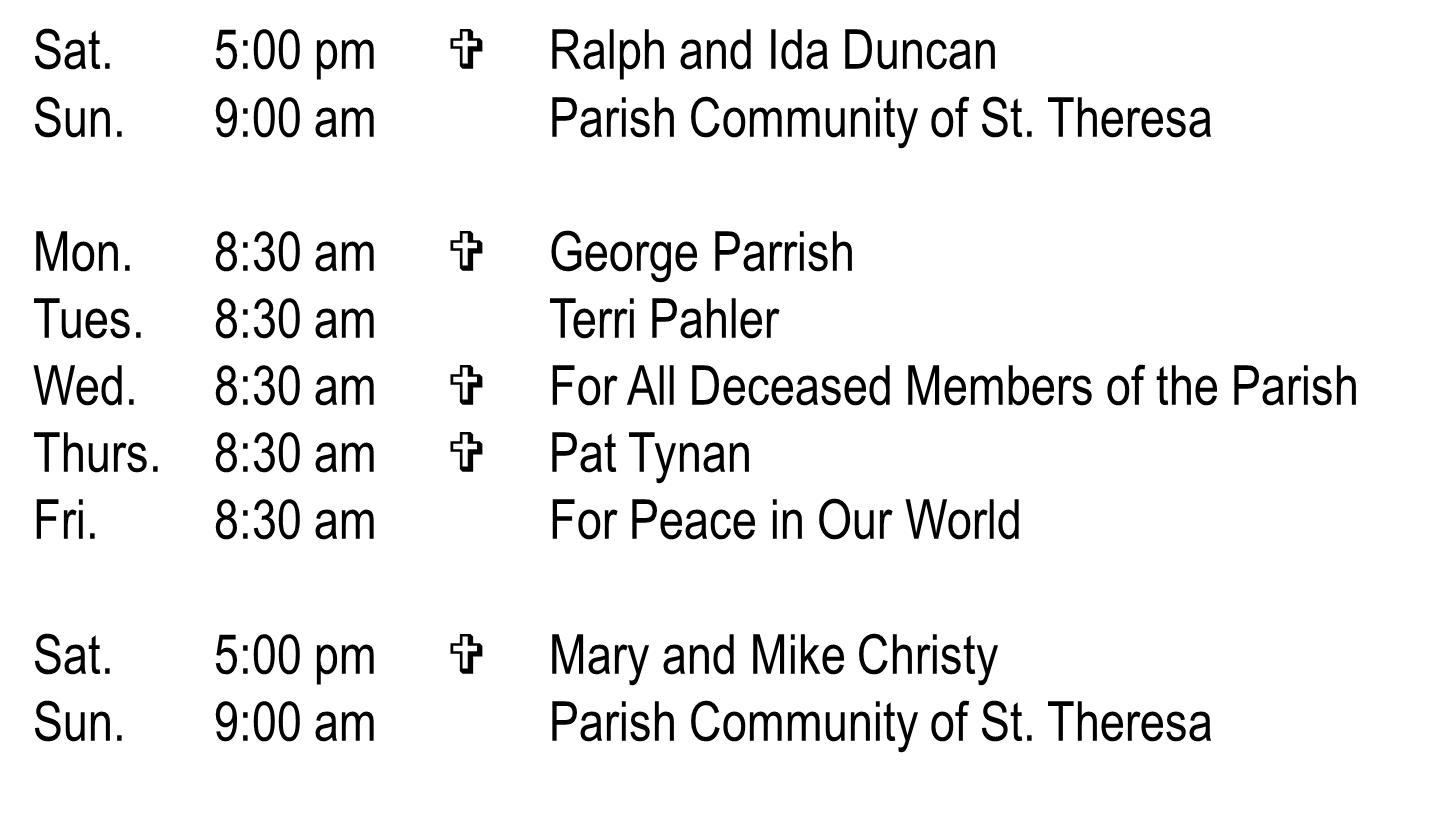
Mass Intentions
November 14-22
To request a Mass Intention you can use the online form at
https://sttheresaoakland.org/pray/mass-confession-times/mass-intention
or by email or phone at: admin@sttheresaoakland.org
341.202.0077
Schedule a Mass Intention Online
Safe Environment Training for Parish & School Volunteers

It is that time of year when notices of expiring Virtus training will be arriving in your email. Please uuse the link in the email to lob into Virtus and take the training that have been assigned. Training must be renewed every three years.
To renew or register for the first time, click on the link in your email or go to https://www.virtusonline.org or click on the link in the upper right corner of the parish website sttheresaoakland.org.
Please remember that in order to volunteer at the parish or school in any capacity (Lector, Eucharistic Minister, Catechist, Choir Member, St. Vincent de Paul, Legion of Mary, CYO etc.), you must complete the training.
If you have any problems or questions contact Yvonne Gabor at volunteer@sttheresaoakland.org.
Parish Office Hours
Tuesday, Wednesday, Thursday, 10:00 am - 2:00 pm
The parish office is closed Monday, and Friday
Parish Office 341.202.0077
After Hours Medical Emergency:
510.547-2777, Option #4
Parish Office 341.202.0077
Yvonne Gabor volunteer@sttheresaoakland.org
Carla Gaul volunteer@sttheresaoakland.org
Renee Lorda renee@sttheresaoakland.org
Rev. Robert J. McCann, Pastor
341.202.0159
rjmccann@sttheresaoakland.org
Rev. Ngema W. Enow, In Residence
341.202.0137
ngemawil.enow@gmail.com
Cathy Brady, Consultant
341.202.0086
cathy_b@sttheresaoakland.org
Rob Cakebread, Music Ministry Director
341.202.0139
rob@sttheresaoakland.org
Cecile Cuttitta, Liturgy Coordinator
341.202.0077
cecile@sttheresaoakland.org
Martha Gamino, Faith Formation Coordinator
341.202.0076
martha@sttheresaoakland.org
Sophia Kassab, Parish Communications
341.202.0134
sophia@sttheresaoakland.org
St. Theresa School
Alicia Ortegon, 510.547.3146
St. Theresa School Principal
a_ortegon@sttheresaschool.org
website: www.sttheresaschool.org
Parish Organization Contacts
Pastoral Council:
Chris Colby ccolby@well.com
Finance Council:
Carolyn Mahoney
carolyn.mahoney675@gmail.com .
St. Vincent de Paul Society
Basil Fedynyshyn
st.theresa@svdp-alameda.org
CYO (Catholic Youth Organization):
Carlos Palacios
sttheresaathletics@gmail.com
St. Theresa Men’s Club
Basil Fedynyshyn
mensclubsttheresa@gmail.com
Legion of Mary
Tom Wallace
tomw1313@sbcglobal.net
WINGS
Deb McJilton
dolcedeb@yahoo.com
Social Justice Committee (SJC)
Lydia Deck ltdeck@me.com
Consolation Ministry
Cecile Cuttitta cecile.cuttitta@att.net
Men’s Faith Sharing
Jim Frei jim@ottofrei.com
Kinderchurch
Shannon Ciston s.ciston@gmail.com
Baptisms and Marriages: by appointment admin@sttheresaoakland.org
To arrange a Funeral call parish office 341.202.0077 or email admin@sttheresaoakland.org
Family Faith Formation (Grades TK-5) & R.C.I.C: Martha Gamino ~ martha@sttheresaoakland.org
Middle School Youth Ministry (Grades 6-8): Martha Gamino ~ martha@sttheresaoakland.org
High School Youth Ministry/Confirmation: Martha Gamino ~ martha@sttheresaoakland.org
O.C.I.A. Order of Christian Initiation of Adults: Lydia Deck ~ lydia@sttheresaoakland.org
Bishop's Ministry Appeal - 2026
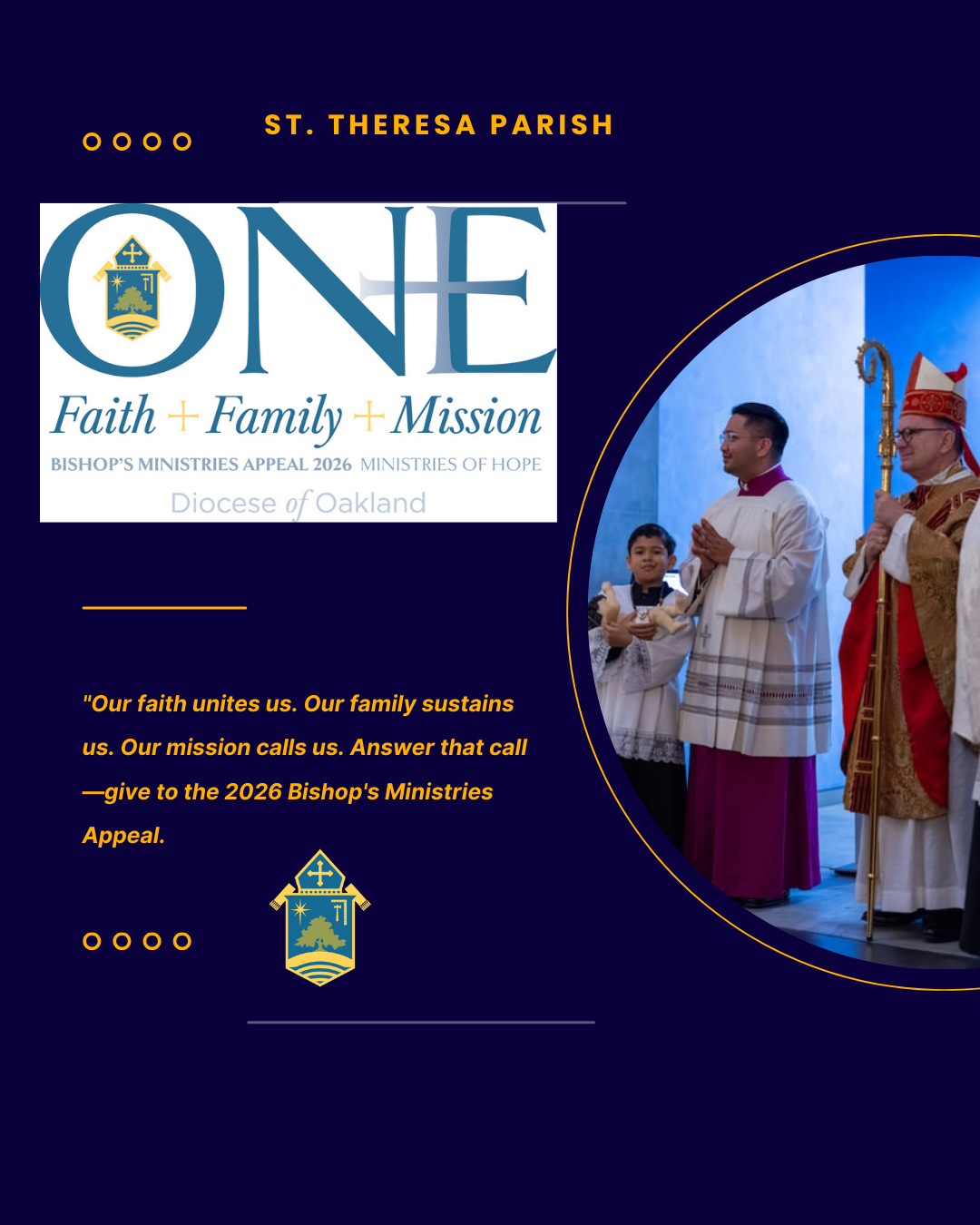
St. Theresa Parish Goal
$35,800
Percentage Achieved 55%
$ 19,820
as of October 31, 2026
Thank you for supporting the Annual Bishop's Ministries Appeal
https://www.oakdiocese.org/bishops-ministries-appeal
Checks must be made out to Roman Catholic Bishop of Oakland.


Please be aware that a scam is going around involving our clergy, and staff (both parish and school) seeking gift card donations.
We will never contact you and ask you to purchase gift cards for us or the parish.
Always stay vigilant and verify all requests from the parish or school office or speak to a staff member.
Protect Yourself:
- Check the email address. The parish address ends in sttheresaoakland.org and the school address ends in sttheresaschool.org
- Always verify
- Trust Your Gut
- Look For Clues
- Skip Unknown Links